

 English
 Español
 Deutsch
 عربى
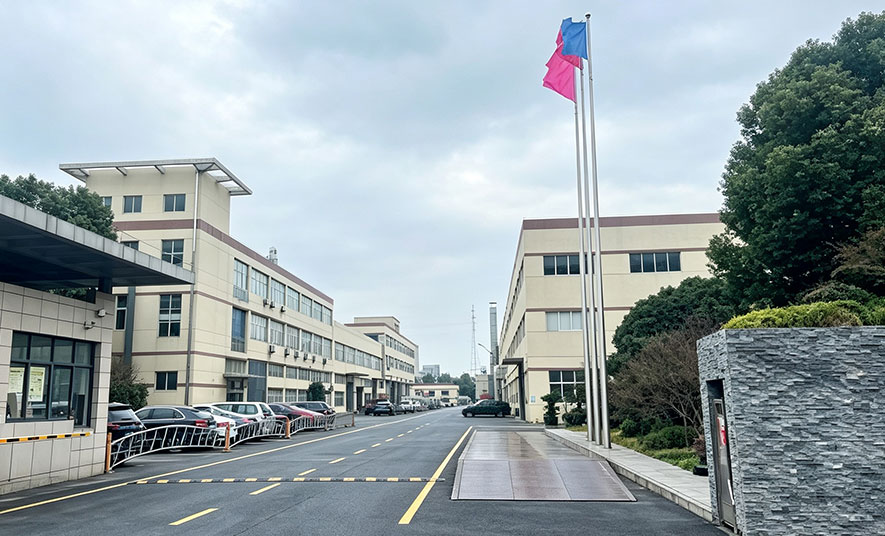

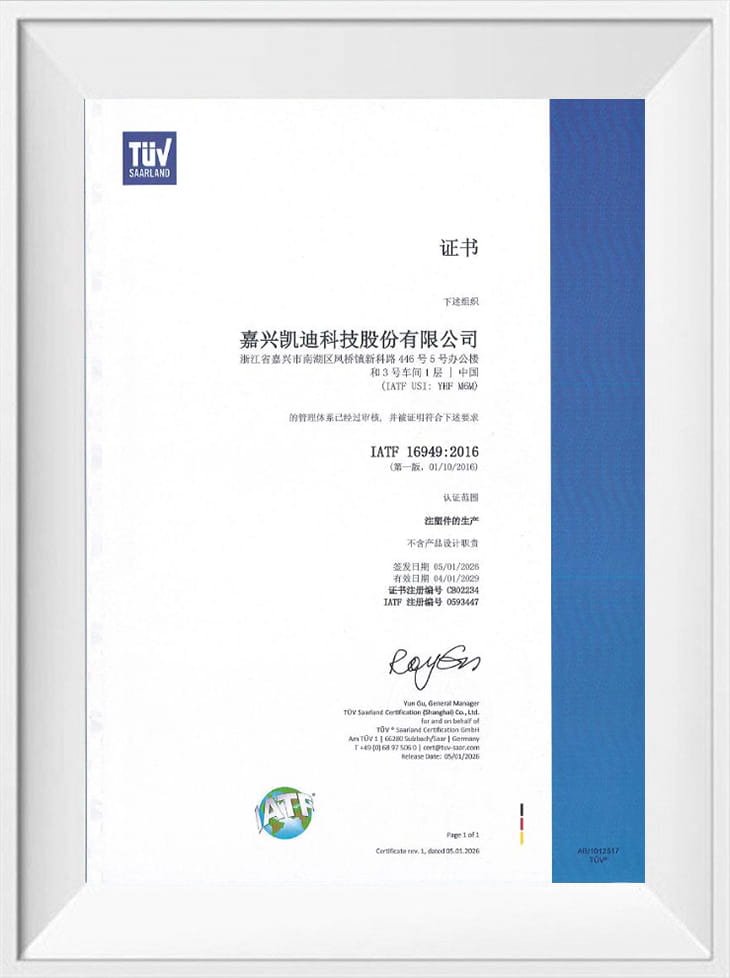
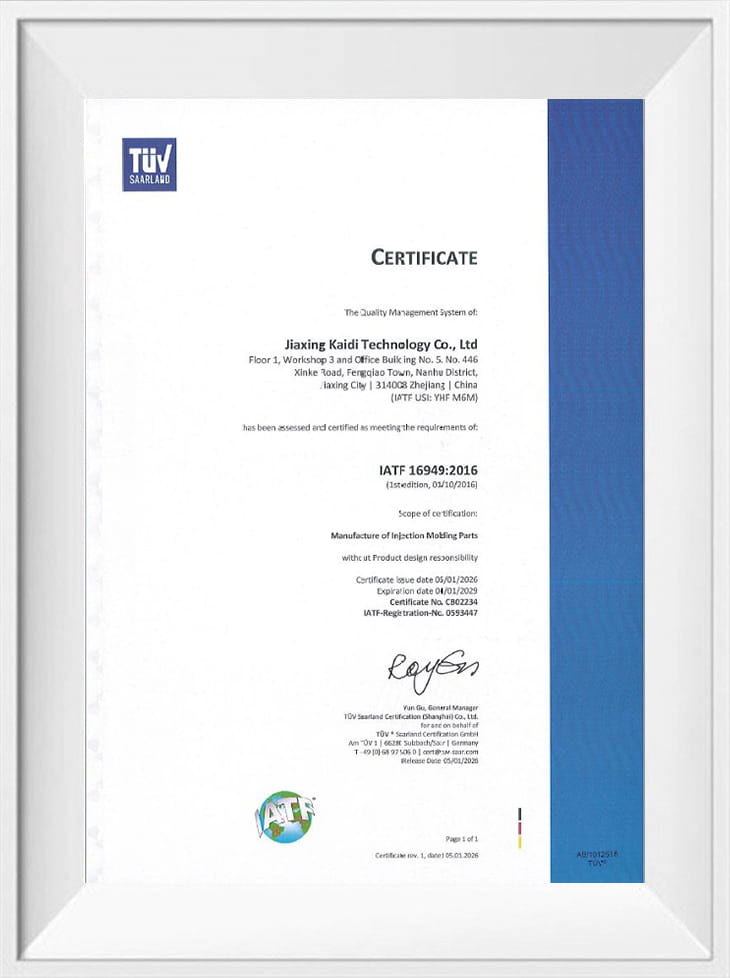
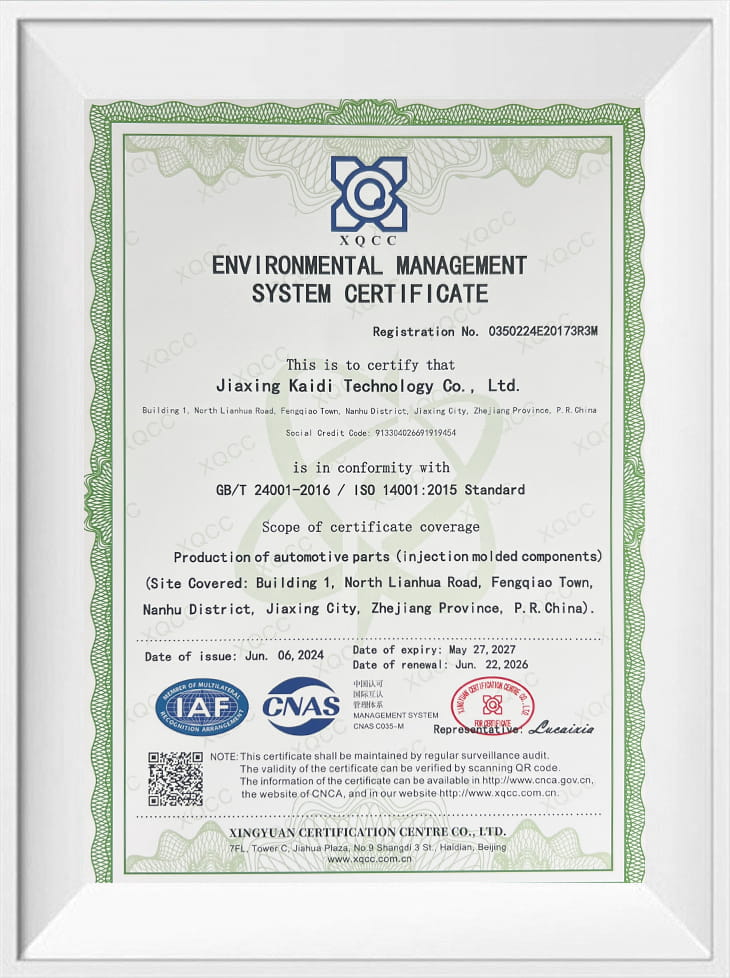
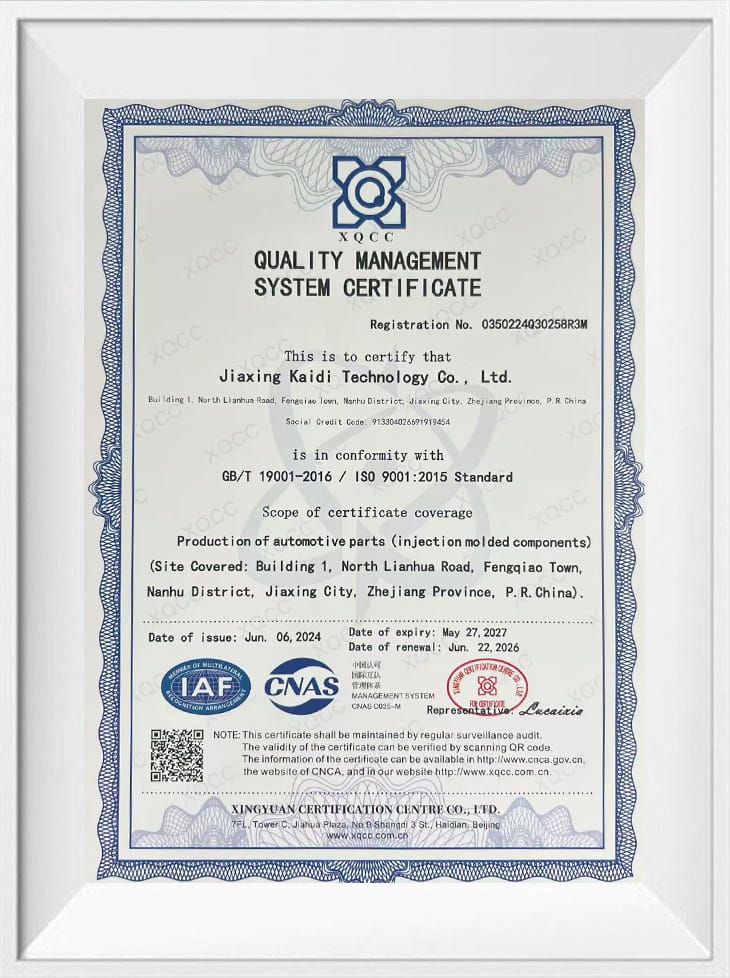

Jiaxing Kaidi Technology Co., Ltd. is a one-stop plastics manufacturer in Jiaxing, Zhejiang, China, running precision mold making, injection molding, surface coating and finished-product assembly as a single production chain. As an Electronics & Appliance Painting manufacturer, we finish molded housings, frames, bezels and covers where the coating is part of the product's visual and tactile specification rather than a decorative afterthought.
Since 2007 we have operated from a 52-acre site with 35,000 m² of factory area. The injection molding and spraying workshops together employ more than 100 people, over half of them technicians, so substrate, tooling and finish decisions are resolved in one technical conversation instead of being handed between separate suppliers.
A Finishing Line Built Around Molded Parts
Electronics and appliance parts arrive at the paint shop with molded-in features that a coating process has to respect: parting lines, gate vestiges, snap fits, threaded bosses, connector openings and sealing surfaces. Our finishing routes are set up for that geometry, not for flat decorative panels. Robotic spraying carries the repeatable application, UV curing gives a fast, controlled film response, and three-coat/two-bake lines provide the alternative route for multi-layer builds and finishes that need intercoat processing.
- Robotic spraying for consistent film build and colour reproduction across production lots
- UV curing for short cycle times on single and dual-coat appearance finishes
- Three-coat/two-bake for layered colour, primer-plus-topcoat and higher-durability builds
- Matte and high-gloss coating as separate, individually specified finish families
- Two-colour injection molding where a paint line can be eliminated at the design stage
The starting point for any new job is the exact molded substrate plus an approved finish standard. Trials run on production tooling parts, not on test plaques, because gloss uniformity, texture match and edge coverage behave differently once the real part geometry and resin lot are in play.
Substrates and Coating Fit Across the Range
Most of the electronics and appliance work we finish sits in a small group of engineering thermoplastics, and each one behaves differently under a coating. The table below shows how we match substrate to route.
| Substrate | Typical parts we finish | Finishing considerations |
|---|---|---|
| ABS | Appliance support brackets, center frames, control housings | Broad paint compatibility; high-gloss surfaces reveal sink marks and flow lines, so mold quality decides final appearance |
| PC | Light covers, windows, structural covers | Solvent sensitivity and stress-cracking risk; coating chemistry and drying profile are reviewed against molded-in stress |
| PC+ABS | Robot controller front and rear housings, charging dock front housings, equipment enclosures | Common appearance blend for enclosures; texture and gloss matched to an approved master sample |
| PP | Large covers, panels and shrouds | Low surface energy; pre-treatment and adhesion-promotion route decided during the coating trial |
| PA66+GF30 | Charging dock adapters, structural brackets | Glass-fibre read-through and sink marks; a filling or primer step may be needed before the topcoat |
| Painted assemblies | Complete housing sets with brackets and inserts | Painting sequence planned around assembly order, masking features and pack-out |
Parts from our Home & Electrical Appliance Parts and Robotics & Automation Components ranges typically move straight from molding into this paint shop, which is where the integrated route pays off: a defect traced to tooling is corrected at the tool, not compensated for in the coating.
Specifications That Decide the Finish
A coating specification only becomes workable when colour, gloss, film build and cosmetic zones are defined together. We build the finish standard with the customer and then verify against it lot by lot.
- Colour measured against an approved master under a defined illuminant and observer, with the acceptable colour difference agreed per project
- Gloss read at 60° on the specified surface, with gloss and texture matched to the master sample rather than to a number alone
- Film build verified with coating thickness readings taken on witness parts or defined measurement points
- Adhesion assessed by cross-cut testing to ISO 2409 on production parts, including edges and curved faces
- Hardness and handling resistance checked against the agreed method, with cleaner and wipe resistance tested using the customer's nominated chemical
- Cosmetic zones classified as A, B or C surface so edge coverage, opening rims and hidden faces are judged by the same rule
Masking, Jigs and Handling
Electronics hardware brings contacts, connectors, earth points and mating faces that must stay coating-free. Masking is designed from the part drawing and 3D data before the first production run, then translated into spray jigs and plugs that hold the part in a repeatable position. Where a masked area sits close to a visible surface, the boundary line is defined on the drawing so coverage and cleanliness are both verifiable.
Handling discipline matters as much as spraying: parts move on dedicated racks from spray booth to cure to inspection, and touch points are kept off A-surfaces until the film is fully cured. For appliance covers and panels, the same discipline protects the surface through assembly and packing.
From Tool to Painted, Assembled Part
Because tooling, molding, coating and assembly sit inside one company, the paint route is planned while the mold is still being designed. Draft angles, gate positions and ejector marks are reviewed against the cosmetic zones, and two-colour molding is evaluated where it can replace a coating step entirely. This is the practical value of the one-stop arrangement: fewer transitions, one set of dimensional references and one owner for appearance complaints.
Our Surface Coating & Painting division runs alongside assembly, so painted housings can be built into finished units with brackets, inserts and pads before packing. Where a project needs only coating on customer-supplied molded parts, we run it as a standalone finishing job against the same standard.
Process Control and Acceptance
The coating trial is the reference event for the whole project. It fixes the substrate grade, pre-treatment, coating system, film build, cure profile and the master sample that all later lots are compared against. From there, production control rests on first-article approval, in-process gloss and colour checks, adhesion testing, and a final visual inspection against the agreed cosmetic zones using the measuring instruments and inspection room on site.
Parts are packed to protect A-surfaces in transit, with layer separation, cavity trays or bagging selected according to part size and surface sensitivity. Inspection records, master samples and the approved finish standard travel with the job so that repeat orders and later tooling refurbishment start from the same reference.
Information We Use to Configure Your Solution
A workable coating quotation and process route come from a compact set of project inputs. When these are available, we can specify the line, the masking, the jigs and the acceptance criteria without assumptions.
- Part drawings or 3D data, plus the cosmetic zones marked as A, B or C surface
- Substrate and resin grade, including any glass-fibre content or additive package
- Finish standard: colour chip or Pantone reference, gloss target, texture reference
- Masking requirements: contacts, connectors, mating faces, threads, sealing surfaces
- Performance expectations: adhesion method, cleaner resistance, handling and wear requirements
- Annual volume, lot size and call-off pattern, to size the spray and cure route
- Assembly scope, packing method and any labelling or traceability requirement
Frequently Asked Questions
Can you paint the same parts you mold for us?
Yes. Housings, frames and covers molded in our injection workshop move directly into the spray shop as part of the same order, which removes the double handling and freight that separate molding and coating suppliers create. Parts molded elsewhere can also be coated here as a standalone finishing job.
Which substrates do you finish most often for electronics and appliances?
ABS, PC, PC+ABS, PP and glass-filled grades such as PA66+GF30 cover most of the work. ABS and PC+ABS give the widest process window for appearance parts; PP needs adhesion promotion, and glass-filled parts may need a filling step before the topcoat. Each substrate is confirmed during the coating trial rather than assumed from the resin data sheet.
How is colour and gloss kept consistent across repeat lots?
Every job is anchored to a signed master sample and a written finish standard. Production lots are checked for colour under fixed lighting conditions and for gloss at 60°, and adhesion is verified by cross-cut testing. When a batch drifts, the coating system and cure profile are corrected against the master rather than re-graded on the line.
What do you need to quote a coating project?
Send the part drawing or 3D model, substrate and grade, the finish standard with colour and gloss, masking requirements, annual volume and lot size, plus the performance expectations the coating has to meet. With those inputs we return a proposed route — pre-treatment, coating system, jigs, masking plan, inspection method and pack-out — and a quotation built on that route.
