

 English
 Español
 Deutsch
 عربى
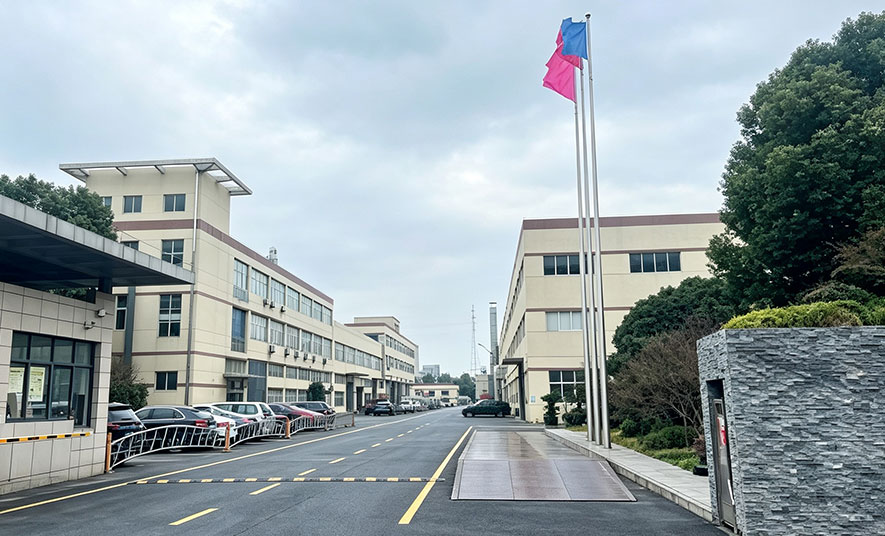

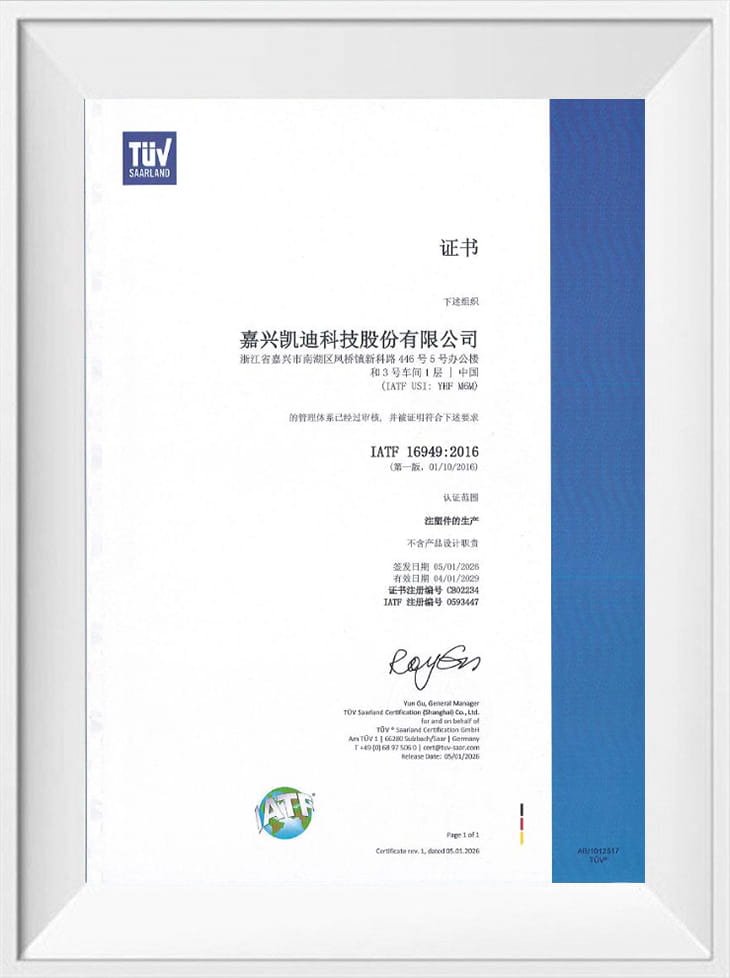
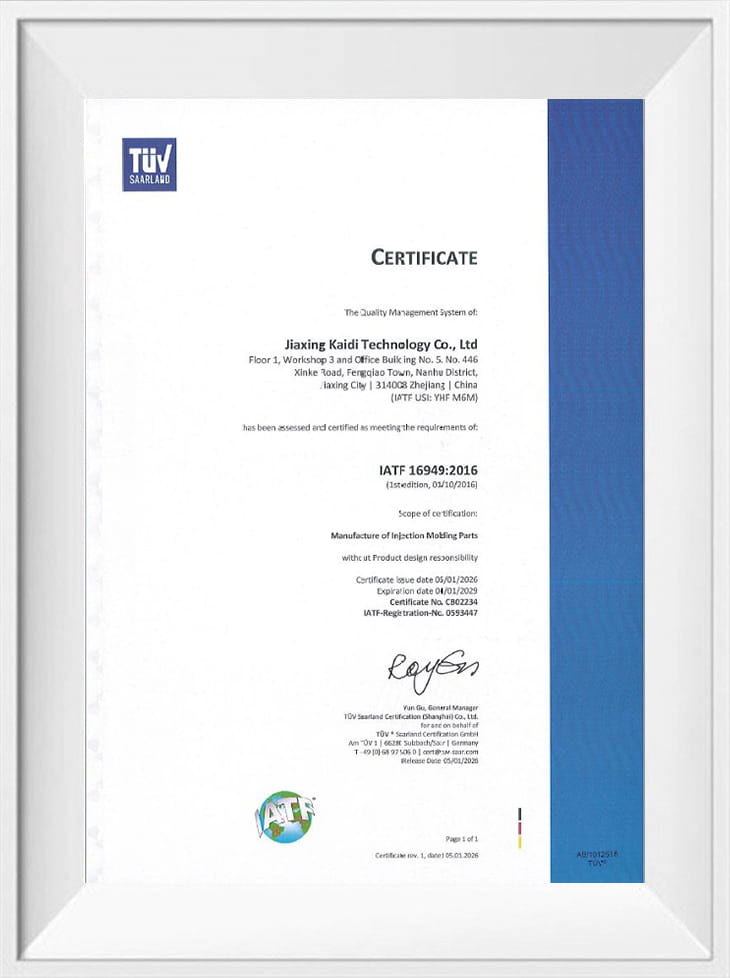
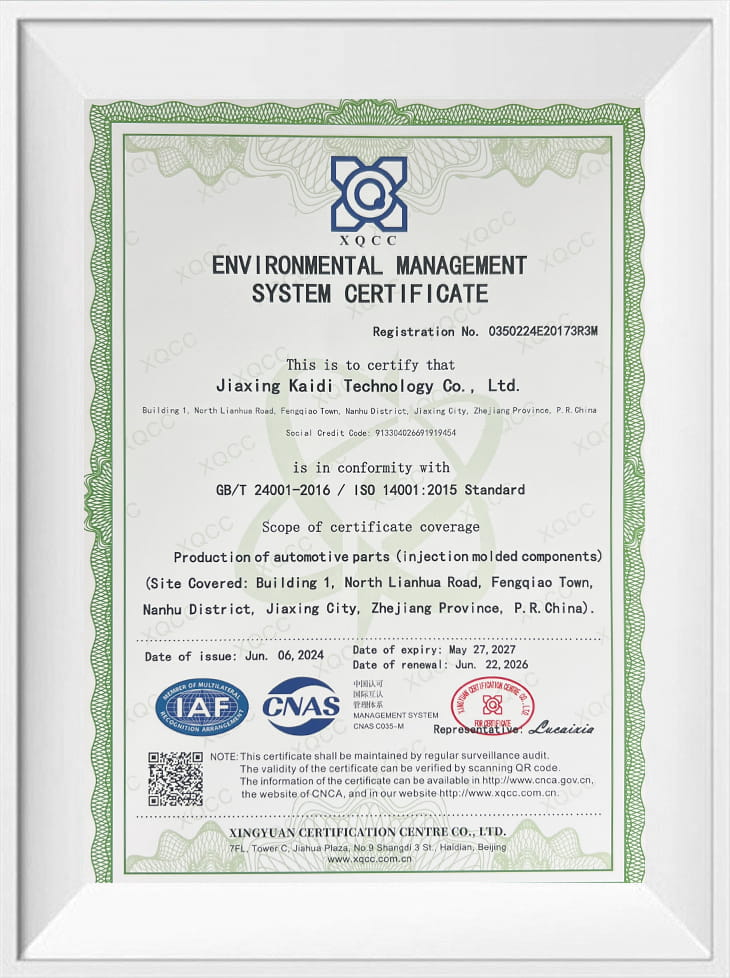
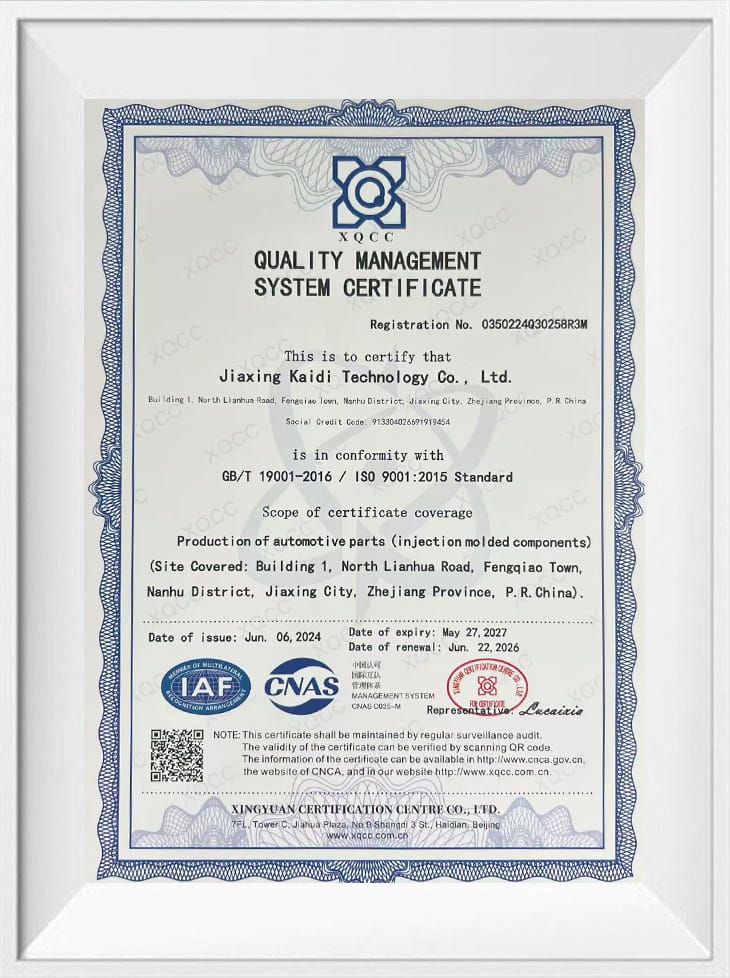

Jiaxing Kaidi Technology Co., Ltd. is a Pet Product Components manufacturer producing injection molded trays, housings, brackets and assemblies for pet care brands, distributors and product developers. Tooling, molding, spray coating and finished-product assembly sit inside one plant, so a litter tray programme and the accessories that ship with it are developed, sampled and produced without splitting responsibility across several suppliers.
We have operated from Jiaxing, Zhejiang since 2007 on a 52-acre site with 35,000 ㎡ of factory floor. The injection molding and spraying workshops together employ more than 100 people, over half of them technicians, and the two disciplines — molding and surface finishing — are managed as one production chain rather than separate subcontract steps.
Pet Product Components We Mold
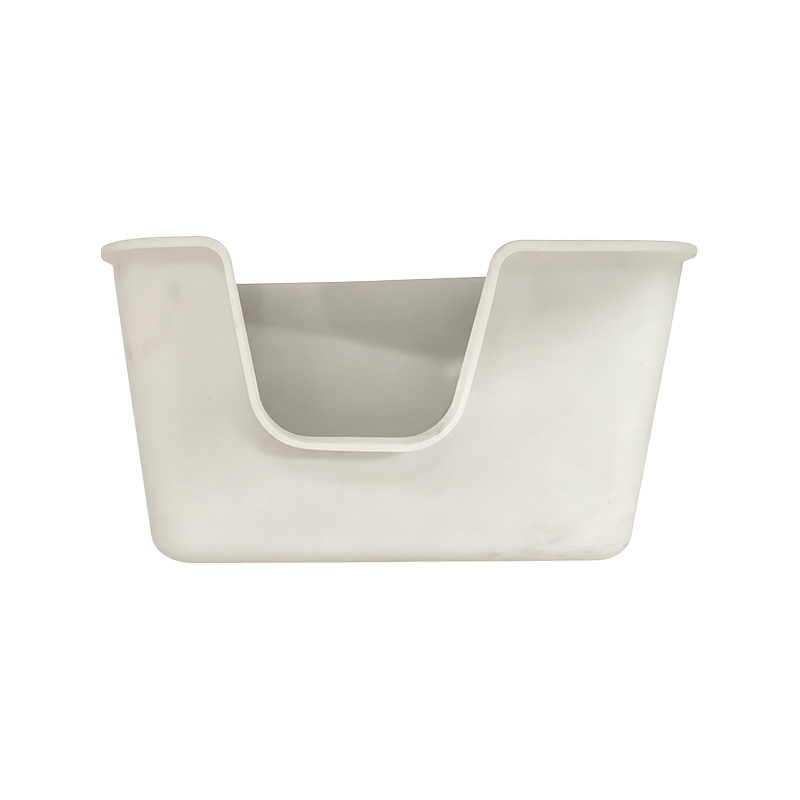
Our pet care work concentrates on large, shallow-to-medium draw parts where the visible surface and the flatness of the base matter as much as wall thickness. Litter trays are the clearest example: a broad, open geometry that must sit level on a floor, release cleanly from the tool, resist cleaning agents and stay dimensionally stable when stacked or shipped. The same engineering logic applies to feeding stations, carrier shells and hygiene appliance housings produced under our injection molding programme.
- Litter trays, pans and hoods — PP, including deep-draw and high-back variants, with rims, lip details and integrated scoop rests.
- Feeding and watering components — station bases, bowl surrounds, splash guards, anti-slip feet and locking collars.
- Carrier and crate components — shells, doors, latches, hinge pins and handle brackets where stiffness and impact resistance govern material choice.
- Grooming and hygiene housings — clipper bodies, dryer shells, brush backs and removable covers requiring tight cosmetic surfaces.
- Structural small parts — clips, brackets, screw bosses, insert mounts and replacement feet that hold the larger assembly together.
| Component family | Typical substrate | Molding and finishing focus |
|---|---|---|
| Litter tray, pan, hood | PP | Base flatness, uniform wall, rib and boss sink control, cleanable radius, colour consistency |
| Feeding station base, bowl surround | PP, ABS | Weld-line placement away from visible faces, seal and snap fit, dishwasher-cycle stability |
| Carrier shell, door, latch | PP, PC+ABS, PA66+GF30 | Impact strength at corners, hinge and latch engagement, draft on textured faces |
| Grooming appliance housing | ABS, PC+ABS | Cosmetic surface, coating adhesion, screw-boss strength, mating-part tolerance stack |
| Soft grip, pad, sealing lip | TPE, silicone | Bond strength in two-color molding, compression set, surface tack |
| Bracket, insert, replacement foot | PA66+GF30, ABS | Stiffness, creep under load, hole position repeatability, gate vestige clearance |
Tooling Decisions That Set Tray Quality
A broad tray is dimensionally unforgiving. Gate position, cooling layout and ejection strategy decide whether the base stays flat after a week in a warehouse, and whether the rim stays parallel to the floor. Our mold making and tooling review therefore starts before steel is cut, with a DFM response covering the points below.
- Uniform wall sections across the base and side walls, with thinning only where the rib layout supports it.
- Rib depth and spacing that carry stiffness without drawing sink onto the visible inner face.
- Draft angles set for the texture depth and for clean release of deep side walls.
- Balanced filling so weld lines land away from the rim and the customer-facing front face.
- Cooling circuits sized to equalise shrinkage between the base and the heavy rim or boss areas.
- Ejection points placed where they will not mark the floor-contact surface.
- Part and packaging design reviewed together, so stacking height and carton fit are already decided at tooling stage.
Where a concept exists but no drawing does, we work from samples, reference parts or a functional brief and return a modelled part for approval. The example in our catalogue, the custom PP cat litter tray, shows the working principles we apply: broad cleanable surfaces, stable assembly geometry and controlled sink around ribs and screw bosses.
Materials, Colour Consistency and Surface Finish
Resin choice in pet products is driven by cleaning agents, odour retention, impact and appearance in that order. PP covers most tray and pan work because it handles detergents, mould release and repeated washing without stress cracking; ABS gives the surface quality needed for visible housings; PC+ABS adds impact resistance to shells and doors; glass-filled PA66 carries load in brackets and latch parts; TPE and silicone provide grip and sealing where hard plastic would rattle or slip.
Colour is treated as a specification, not a preference. We agree a colour chip or masterbatch reference, hold the reference through the production run and check against it under consistent lighting. The spraying workshop adds matte or high-gloss coating and UV-cured finishes where a moulded surface cannot deliver the required appearance, and two-color molding is used where a soft-touch zone and a rigid body must form one part.
Dimensional Control, Assembly and Acceptance
Trial shots are measured in our measuring room before a mould is signed off, using dimensional instruments rather than visual judgement alone. The report covers the features that determine whether the product works: base flatness, overall length and width, rim height, boss and hole positions, and wall thickness at nominated points. Mating parts are fitted during the trial so tolerance stacks are confirmed on the bench rather than discovered in the field.
- First-article inspection with a dimensional report and sample retention for reference.
- In-process checks on critical dimensions and appearance during production runs.
- Mold maintenance workshop for polishing, wear repair and runner or gate correction between campaigns.
- Full product assembly — inserts, mating parts, hardware and accessory packing — completed before shipment where the scope requires it.
- Packaging reviewed against drop, stacking and container-loading requirements.
Information We Use to Configure Your Solution
A usable proposal needs the working point, the material and the production target. With these inputs we return a tooling concept, a moulding plan and a costed route from first sample to repeat order.
- Geometry: 3D model or 2D drawing, or physical samples where the part already exists.
- Material and finish: nominated resin, colour reference, texture or gloss level, and whether coating or two-color molding is expected.
- Function: loads carried, snap or screw assembly, mating parts supplied by you, and the cleaning or chemical exposure the part will see.
- Volumes: annual quantity, launch quantity, expected tool cavitation and whether the part runs continuously or in campaigns.
- Acceptance: critical dimensions and tolerances, appearance standards and any market-specific documentation the product must carry, such as food-contact or toy-safety requirements.
- Delivery scope: moulded part only, coated part, assembled unit or kit, plus packaging and carton marking instructions.
Frequently Asked Questions
Can you produce a large litter tray that stays flat on the floor?
Yes, and flatness is designed in rather than inspected out. We balance the fill pattern, cool the base and rim evenly, place ribs to stiffen without sink, and measure the floor-contact face during first-article inspection. Tray size is matched to the press and tooling available for the geometry, and we confirm that fit during the DFM review.
What do you need from us to quote a pet product component?
A 3D model or drawing, the resin and colour you expect, annual and launch volumes, the finish requirement, and any mating parts or assembly content. With those we can return tooling scope, moulding assumptions and a costed production route. Where the design is still open, we review wall sections, draft and ribbing with you before quoting.
Do you handle coating, colour matching and assembly, or only molding?
All four are handled in-house: tooling, injection molding, spray coating with matte, high-gloss and UV finishes, and finished-product assembly. That means colour, surface quality and fit are resolved inside one production chain instead of being negotiated between separate suppliers, and responsibility for the finished unit stays with us.
How is mold maintenance handled after the first production run?
We retain the tool and maintain it in our own mold maintenance workshop, covering polishing, wear correction and gate or runner adjustment between campaigns. Maintenance is scheduled around your production windows, and we keep reference samples from the original trial so refurbishment is measured against the approved standard rather than an assumption.
