

 English
 Español
 Deutsch
 عربى


Appliance and Consumer Tooling Built for Series Production
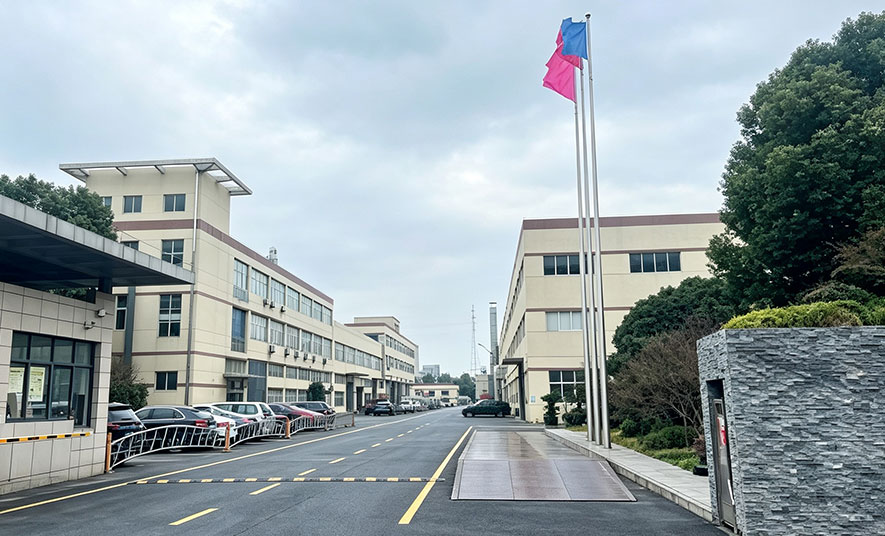
Jiaxing Kaidi Technology Co., Ltd is an Appliance & Consumer Molds manufacturer based in Jiaxing, Zhejiang, building injection tooling for visible housings, frames, brackets and other consumer plastic parts. Tooling here is one stage of a continuous chain: mold design and machining sit alongside injection molding, spray coating and finished-product assembly, so a tool is released into the same plant that will run it.
Established in 2007, we operate a 52-acre site with 35,000 m² of factory floor. The injection molding and spraying workshops employ over 100 people, more than half of them professional technicians, and annual output value is approximately 90 million yuan. Parts from these tools run into household appliances, office automation equipment, robotics, telecommunications, medical devices and consumer products.
- Scope under one roof: precision mold manufacturing, injection molding, UV and matte/high-gloss coating, product assembly, after-sales support and mold maintenance.
- Process coverage: single-material and two-color injection molding, matched to the part design.
- Design team: mold designers with over ten years of experience in automotive and small appliance tooling.
The Mold Range We Build
Every tool is configured around the part it produces, the polymer and the production target. The families below group the work by what has to be held in the steel.
| Mold / part family | Typical parts | Common materials | What the tool must control |
|---|---|---|---|
| Visible housings and enclosures | Appliance covers, controller front and rear housings, charging-dock housings | ABS, PC, PC+ABS | Texture continuity, gloss level, parting-line position on visible faces, flatness across mating edges |
| Frames and structural brackets | Appliance center frames, support brackets, fixing brackets | ABS, PC+ABS, PA66+GF30 | Screw-boss integrity, sink at ribs and bosses, hole position, stiffness without added wall |
| Appearance parts for coating | Painted fascias and panels receiving UV or matte/high-gloss finish | ABS, PC+ABS | Substrate free of flow marks, gate marks placed out of sight, dimensional stability through the coating process |
| Small precision components | Cushion pads, adapters, snap-fit internals | Silicone, PA66+GF30, PC+ABS | Tolerance stack, snap engagement, sealing faces, ejection without marking |
| Containers and consumer durables | Litter trays, bins, shells and drawn consumer bodies | PP | Draw depth, corner radii, warpage, cycle time |
| Two-color and multi-material parts | Housings with separate color or function zones | Confirmed per part | Shut-off at the material boundary, register between shots, first-shot stability |
Where These Tools Fit in the Product Programme
Home and electrical appliance parts
Appliance work is driven by assembly fit: a center frame, bracket or cover has to locate against mating parts and hold screw torque over the product life. Our Home & Electrical Appliance Parts programme carries these tools from first sample into serial molding.
Consumer durables and pet products
Consumer items add a second demand on top of fit: the part is handled, seen and cleaned. Tools for trays, shells and enclosures are laid out around draw depth, radius consistency and a surface that stays uniform after coating or texturing.
Device and automation housings
Controller housings, dock bodies and enclosure sets combine cosmetic faces with internal bosses, cable openings and snap features. Gate and ejector layout is fixed so that no witness mark lands on a face the end user sees.
Design Decisions That Set the Working Point
DFM review happens before steel is cut, and it is where most production risk is removed. We align wall sections, draft, gates, ejectors, parting lines and appearance zones in one review with the customer.
- Wall and rib layout balanced against boss and screw geometry to limit sink.
- Draft and shut-offs adequate for the agreed texture depth.
- Gate position chosen for flow length and for where a mark is acceptable.
- Ejection layout that keeps witness marks off cosmetic faces.
- Parting line placed on an edge or shadow line rather than a flat face.
- Cooling layout and cycle target agreed against the annual volume and press.
Sink around bosses and ribs, flow marks and weld lines, flatness, texture continuity, snap-fit and screw-boss dimensions, cycle efficiency and serviceability are reviewed at design release and again on trial parts. Flow simulation supports the gate and feed decisions where the part geometry warrants it.
Tool Build, Trial and Acceptance
- DFM and mold design: part data, tolerance drawing, material and volume are turned into a tool layout, runner scheme and ejection plan.
- Machining and fitment: cavity, core, inserts and sliders are produced and fitted, with dimensions checked during build.
- Tool trial: first-shot samples are molded on a production-representative press at the agreed settings.
- Sample measurement: critical dimensions are checked in the measuring room with the instruments used for production inspection, against the 2D drawing and datums.
- Appearance and release: texture, color and parting-line positions are confirmed against the agreed standard before the tool is accepted.
Trial reports, sample parts and inspection records travel with the tool, so a mold transferred to another site arrives with its working point documented. Where parts continue in our own Injection Molding lines, the same inspection routine governs serial supply.
Maintenance, Spares and Delivery Scope
Our Mold Making / Tooling workshop handles upkeep after release, not only the original build.
- Mold maintenance workshop for cleaning, inspection, polishing and wear-part replacement.
- Planned upkeep intervals discussed against shot volume and material abrasiveness.
- Ejector, insert and wear-part requirements reviewed at quotation stage so the tool stays serviceable.
- Delivery scope agreed in writing: tool, spare parts, sample parts, cooling and ejection documentation, and packaging suitable for sea or air freight.
Information We Use to Configure Your Solution
A workable tool quotation depends on part and production data, not on a category description. These are the inputs we work from:
- 3D part data in STEP or IGES, plus a 2D drawing with tolerances and datums.
- Polymer grade, color and any filler content, with the shrinkage basis.
- Annual volume, batch size and expected tool life.
- Cavity count target and the press or tonnage range the tool must suit.
- Texture, gloss and color standards, and whether parts go on to coating.
- Appearance zones, acceptable gate and ejector positions, and assembly interfaces.
- Secondary operations in scope: painting, printing, assembly, packaging.
- Delivery destination, packaging requirement and documentation language.
Frequently Asked Questions
Which parts belong in the appliance and consumer mold category?
Visible covers and housings, center frames, support and fixing brackets, dock bodies, cushion pads, trays and consumer shells. These parts share a common requirement: appearance and assembly fit have to be controlled in the same tool, which is why they are quoted and built together.
What do you need from us to quote a tool?
Part data, a tolerance drawing with datums, the material grade, annual volume, cavity count target, texture and color standard, and the press the tool will run in. With those we return a tool layout, runner and ejection concept, trial plan and delivery scope.
How is the cosmetic appearance of a molded part agreed?
Texture and color are fixed against a standard before steel is cut, and gate, ejector and parting-line positions are placed in the design review. Trial parts are then judged on the agreed faces, so acceptance is not left to interpretation at the end of the build.
Can you mold, coat and assemble the parts after the tool is approved?
Yes. Mold manufacturing, injection molding, spray coating and product assembly run in the same plant, so a tool moves from trial into serial production without changing hands. Mold maintenance and after-sales support continue through the production life of the tool.
