

 English
 Español
 Deutsch
 عربى
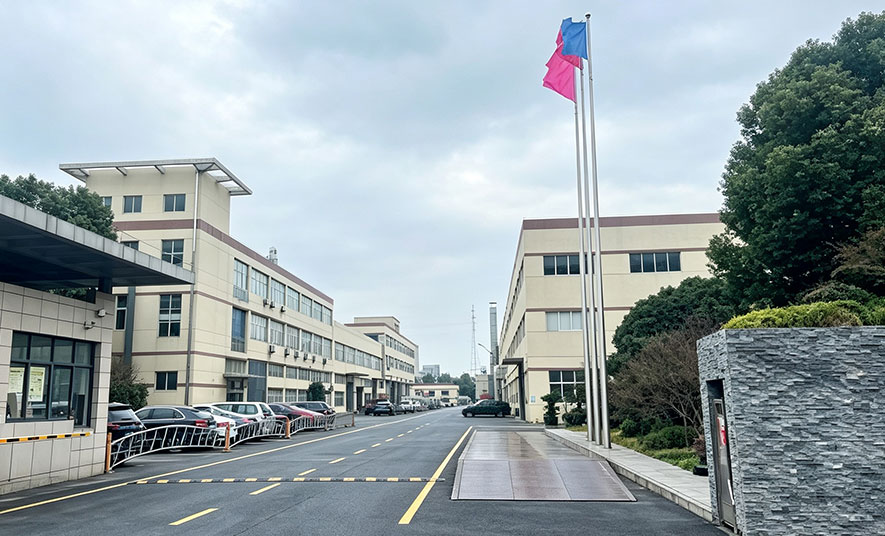

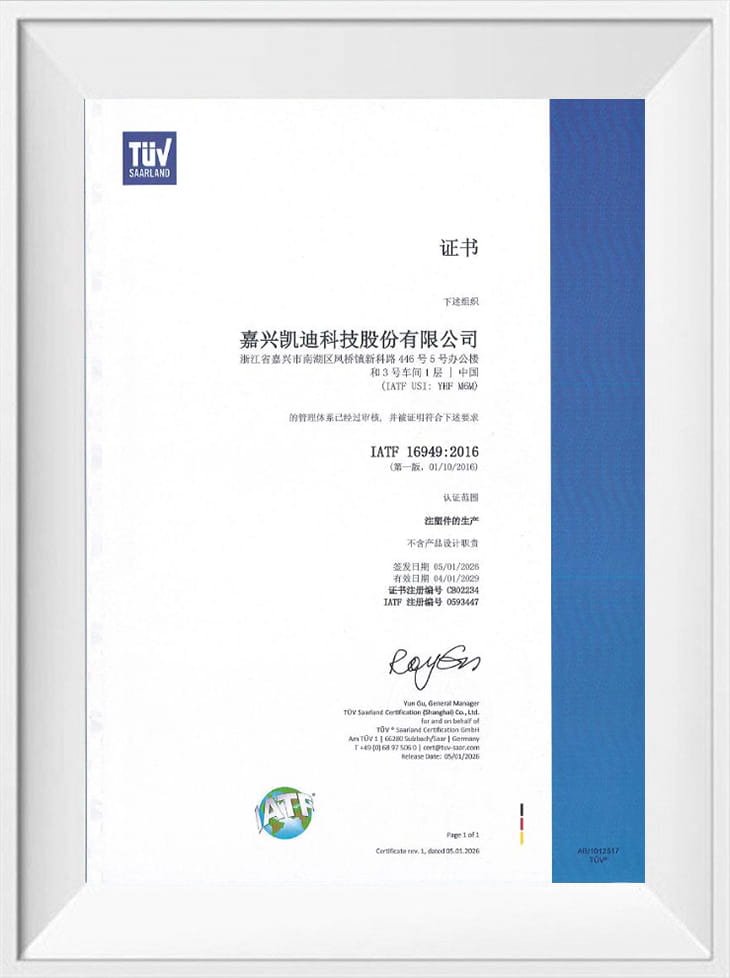
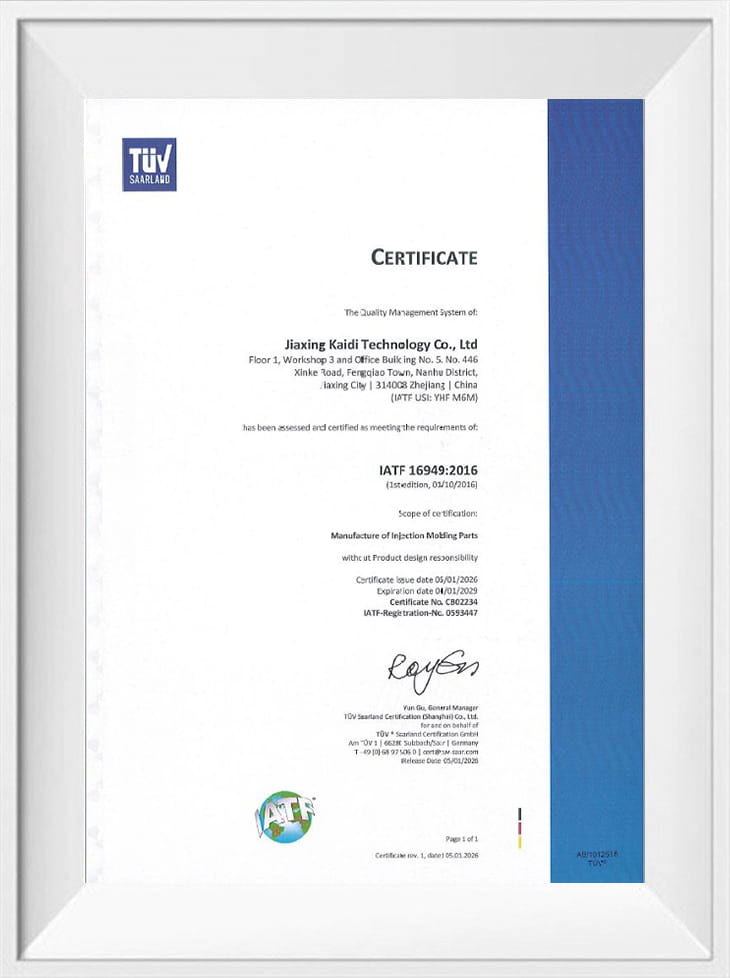
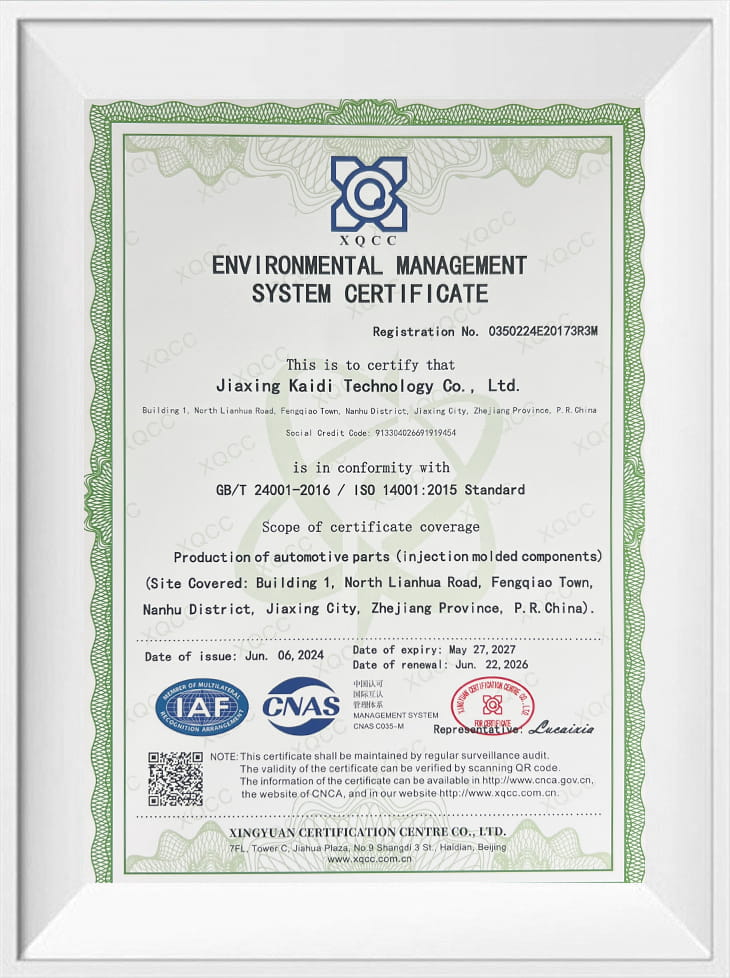
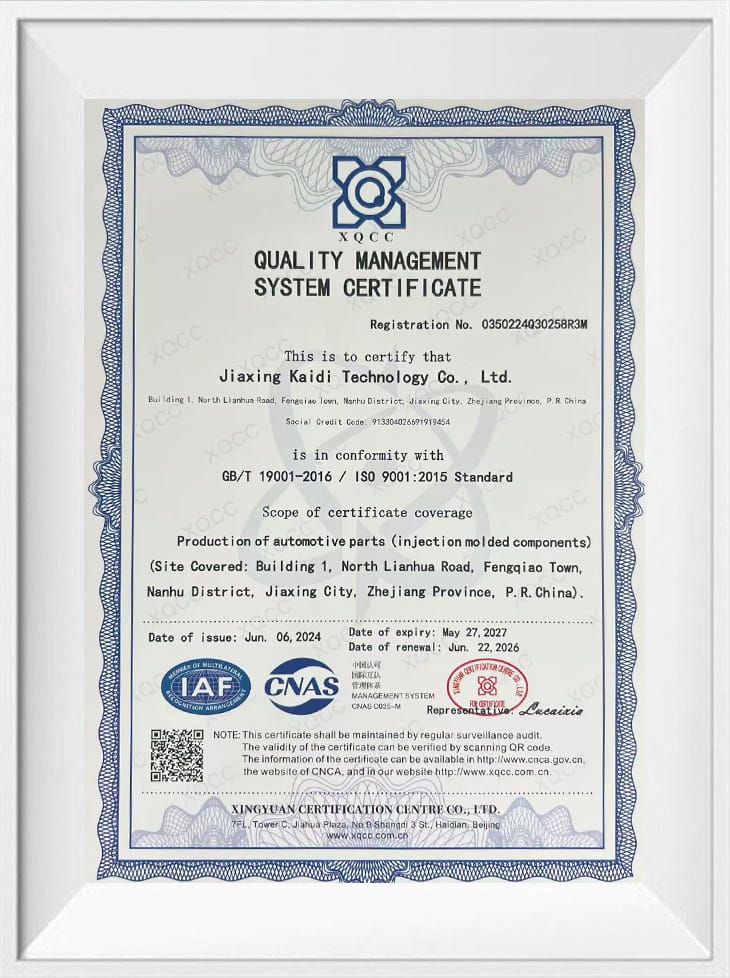
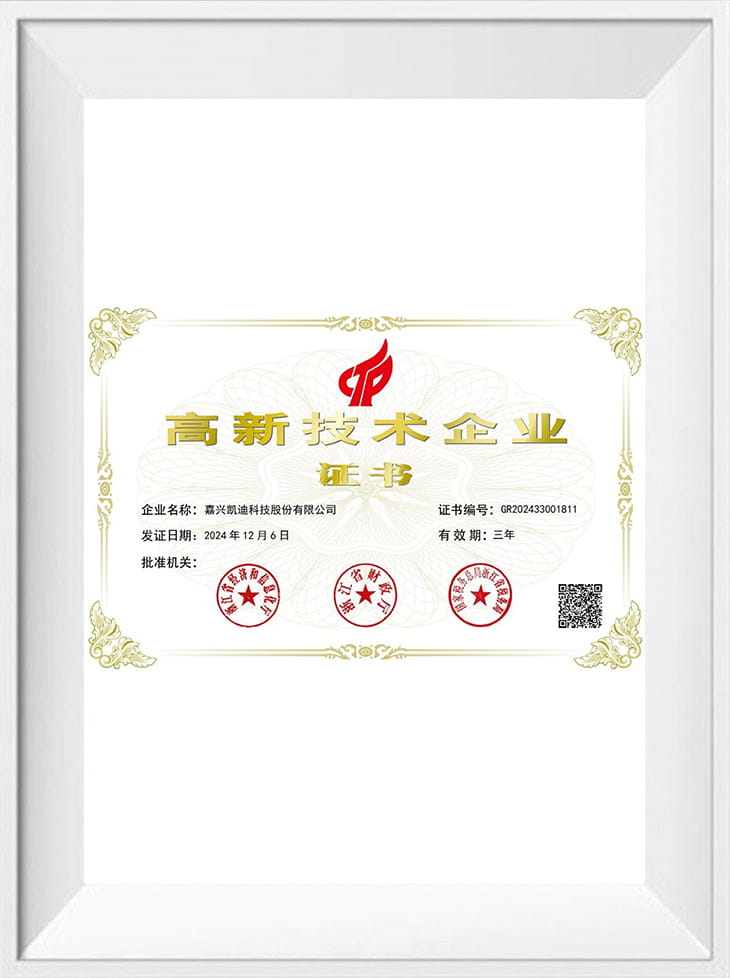
Jiaxing Kaidi Technology Co., Ltd. is an OEM Automotive & Motorcycle Painting manufacturer in Jiaxing, Zhejiang, finishing injection-molded plastic components for vehicle interiors, exterior trim and motorcycle bodywork. Painting runs as one stage of an integrated program — mold making, injection molding, coating and assembly — so the substrate, tool texture and coating stack are engineered together instead of being handed between separate suppliers.
- Established 2007, operating on a 52-acre site with 35,000 m² of factory floor.
- Injection molding and spraying workshops staffed by more than 100 people, over half of them technicians.
- Process services include two-color molding, UV coating, matte and high-gloss coating, and product assembly.
- Parts finished for automotive interior and exterior trim, motorcycle panels and covers, appliance housings and industrial equipment.
Our Coating Range and Where Each Finish Fits
We build the coating stack around what the part has to survive: sun exposure and washing on exterior trim, abrasion and cleaning agents on interior surfaces, stone impact and vibration on motorcycle covers. The same workshop handles robotic spraying on three-coat/two-bake lines with UV-curing capability, which lets us move between high-gloss decorative work and durable low-gloss functional finishes without changing supply chain.
| Finish | Coating route | Typical substrates | Where it fits | Primary controls |
|---|---|---|---|---|
| UV-cured clear topcoat | Base coat plus UV-cure clear | ABS, PC+ABS, PC | Exterior trim and covers needing gloss retention and surface hardness | Adhesion, film build, cure verification |
| High-gloss topcoat | Three-coat / two-bake | ABS, PC+ABS, PC | Visible exterior panels, sidecar canopy panels, decorative trim | Dust and particle control, orange peel, distinctness of image |
| Matte and low-gloss | Matte topcoat over base coat | ABS, PC+ABS, PP with adhesion promoter | Interior trim, wheel covers, radiator covers | Gloss consistency batch to batch, texture uniformity |
| Primer, base and clear on polyolefins | Adhesion promoter, primer, base, clear | PP, talc-filled PP | Large covers and panels with weld lines and flow marks | Edge coverage, masking accuracy, adhesion after humidity |
| Metallic and effect colors | Effect base coat plus clear | ABS, PC+ABS | Trim accents and visible body details | Flop and pigment orientation, multi-angle color match |
Because the same program produces tools and moldings, our automotive plastic parts and motorcycle plastic parts reach the spray line with a known tool history — grain depth, gate position, ejector marks and draft are already documented rather than discovered at first-off.
Materials, Part Geometry and Surface Conditions
Substrate choice decides how much preparation sits in front of the base coat. ABS, PC+ABS and PC accept primer systems readily and are the most predictable platforms for high-gloss exterior work. PP and PP-filled grades need an adhesion promoter or surface pretreatment before the primer, and the reward is a durable finish on large, low-cost covers exposed to heat and road spray.
- Weld lines and flow marks on large covers behave differently under a gloss than under a matte topcoat; we agree the visual standard before tooling release.
- Gate and ejector marks are positioned against masking zones and visible-area maps so mechanical damage does not become a repaint.
- Textured tool surfaces carry part of the appearance; grain depth and gloss target are matched so the coated part reads as designed.
- Thin walls and ribs risk sink and read-through under a high-gloss clear, so wall sections and coating build are reviewed together.
Where we also build the tool, that review happens against the automotive injection molds before steel is cut, which is where most appearance disputes are actually prevented.
Critical Specifications We Build Around
Finish performance is judged on characteristics that interact. Adhesion depends on cleaning, primer compatibility and cure; gloss depends on atomization, film build and booth cleanliness; color depends on paint batch, substrate color and film thickness. Treating any one of them in isolation produces a line that drifts.
- Substrate compatibility — resin grade, filler content, regrind ratio and release agent residue.
- Adhesion — cross-hatch results on flat areas and on edges, before and after humidity exposure.
- Color and gloss consistency — measured against a signed master at an agreed sampling frequency.
- Dust and particles — booth filtration, part handling and jig cleanliness.
- Edge coverage — film build on radii, cut-outs and thin sections, where coating thins fastest.
- Masking accuracy — the boundary between coated and uncoated zones, including mating faces and clip seats.
- Resistance — chemical, abrasion, water immersion and UV exposure levels tied to where the vehicle operates.
Process Configuration and Line Integration
Each job is configured as a sequence rather than a single spray operation. We agree jigging and hanging points with the molding team so gravity drains correctly, masking drawings so operators work to a fixed boundary, flash-off time before the clear, and the curing route — thermal bake, UV cure or a combination where the geometry allows it.
Configuration decisions we settle with the customer before first-off:
- Which surfaces are cosmetic, which are functional, and which are covered after assembly.
- Whether painted parts ship loose, masked, or built into sub-assemblies in our assembly stage.
- Whether two-tone or two-color effects are achieved through molding, masking or a combination.
- Repair policy for defects found at inspection — rework, strip and recoat, or scrap classification.
- Handling and stacking method for the returnable packaging that will carry the parts.
Acceptance, Documentation and Service Life
Approval is defined by a signed finish sample and a test plan agreed before serial supply. The sample fixes color, gloss level and texture reference in physical form; the test plan fixes which characteristics are measured, by what method, and at what frequency. The two documents travel with the project from first-off through running production.
Production parts are checked against the approved master using color and gloss measurement, film thickness checks and adhesion testing at the agreed intervals, with visual inspection for particles, runs, sags, thin edges and masking slip. When a resin grade, paint supplier or tool texture changes, the finish is re-approved rather than assumed to carry over. Documentation released with the project covers the approved sample, coating system data and inspection records for the agreed characteristics, so incoming inspection on your side can follow the same reference.
When we have supplied the mold as well as the coating, our after-sales support and mold maintenance service cover wear on both sides of the process — a polished or re-textured cavity is assessed against the approved finish, not in isolation.
Information We Use to Configure Your Solution
Painting quotations are prepared from part data, not from part names. The inputs below are what move a request from a price indication to a workable coating specification.
| Input | What we need | What it determines |
|---|---|---|
| Part data | 2D drawing and 3D model in STEP or IGES, plus the cosmetic surface map | Masking zones, jigging points, handling method |
| Substrate | Resin grade, filler content, color, permitted regrind ratio | Pretreatment, primer selection, coating stack |
| Appearance standard | Physical color master, gloss target, grain reference, accepted defect level | First-off approval and in-process inspection limits |
| Performance requirement | Adhesion, humidity, chemical, abrasion and UV exposure targets | Topcoat type and the acceptance test plan |
| Volume and schedule | Annual quantity, batch size, call-off pattern, packaging type | Line time, jig quantity, masking labor, packing layout |
| Scope boundary | Whether we also mold the part; assembly content; shipping protection | Integration plan and delivery scope on the quotation |
Questions We Answer Before Tooling Release
Which plastic substrates can you paint?
ABS, PC+ABS and PC are the most straightforward and cover most interior trim and visible exterior details. PP and PP-filled grades are routinely finished with an adhesion promoter and primer system; glass-filled and blended grades are reviewed against the cosmetic requirement, because filler at the surface changes how the base coat lays down. We confirm the stack against the resin grade you specify, not against a generic family name.
Do you paint parts molded somewhere else?
Surface spray coating is offered as a process service in its own right. Parts molded elsewhere are assessed first for substrate grade, mold texture, gate and ejector marks and surface defects that would read through the coating. Anything requiring repair before coating is identified at quotation stage, since repairing a substrate is a different operation from spraying it.
How is color and gloss held across production batches?
A physical master is signed at approval and stays with the job. Production parts are measured against it for color and gloss at agreed intervals, paint batches are recorded so any drift can be traced to a specific delivery, and a change of resin grade, paint supplier or tool texture triggers re-approval. This matters most on metallic and effect colors, where flop changes with film build and application technique.
What do you need to quote a painting project?
Drawings and 3D data with the cosmetic surface map, the resin grade, a color and gloss standard, the performance requirements tied to the vehicle environment, annual volume and batch pattern, and the scope boundary — molding, assembly and packing. With those we can define the coating stack, the acceptance plan and the delivery scope in one proposal.
