

 English
 Español
 Deutsch
 عربى
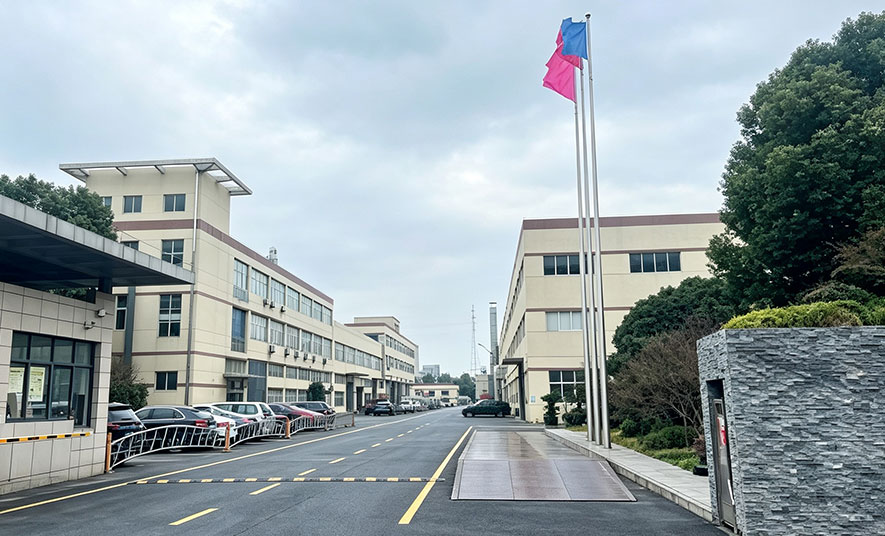

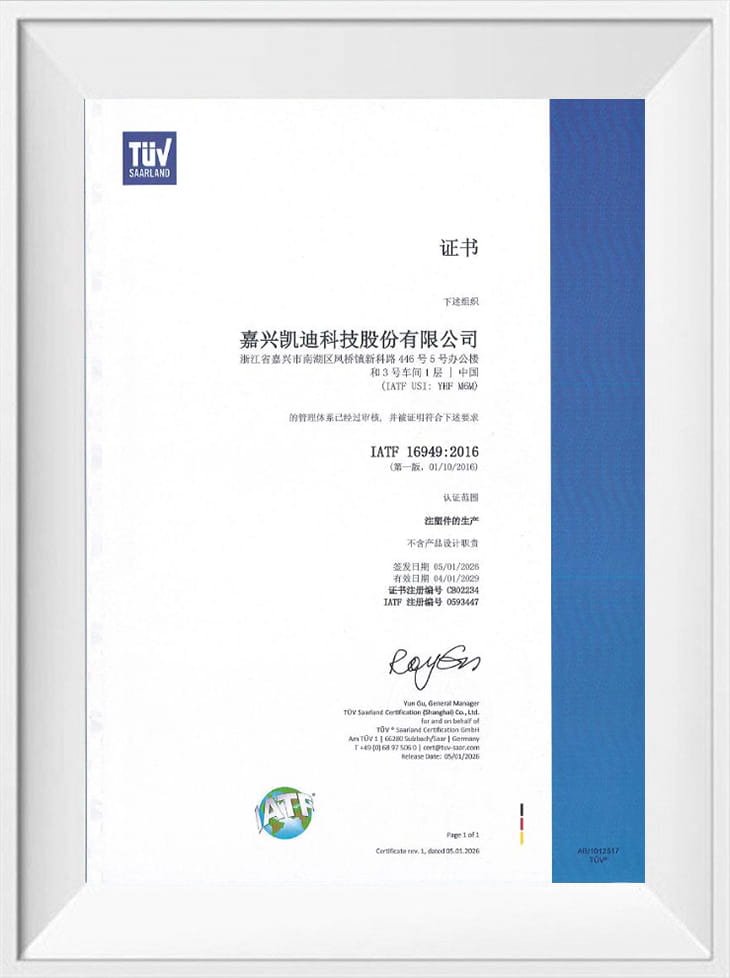
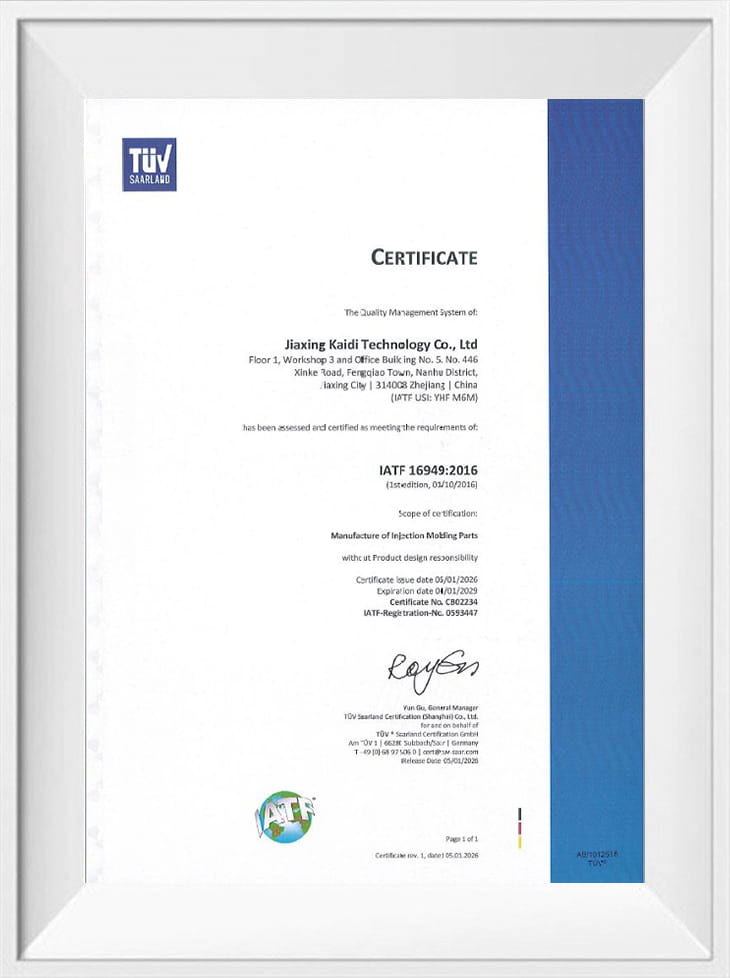
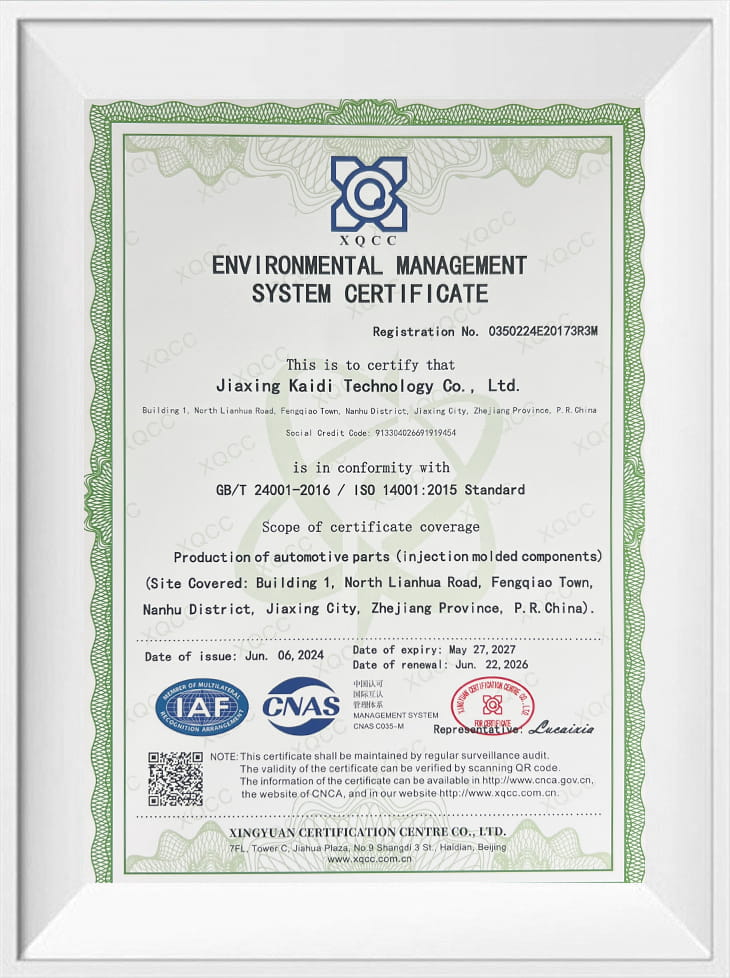
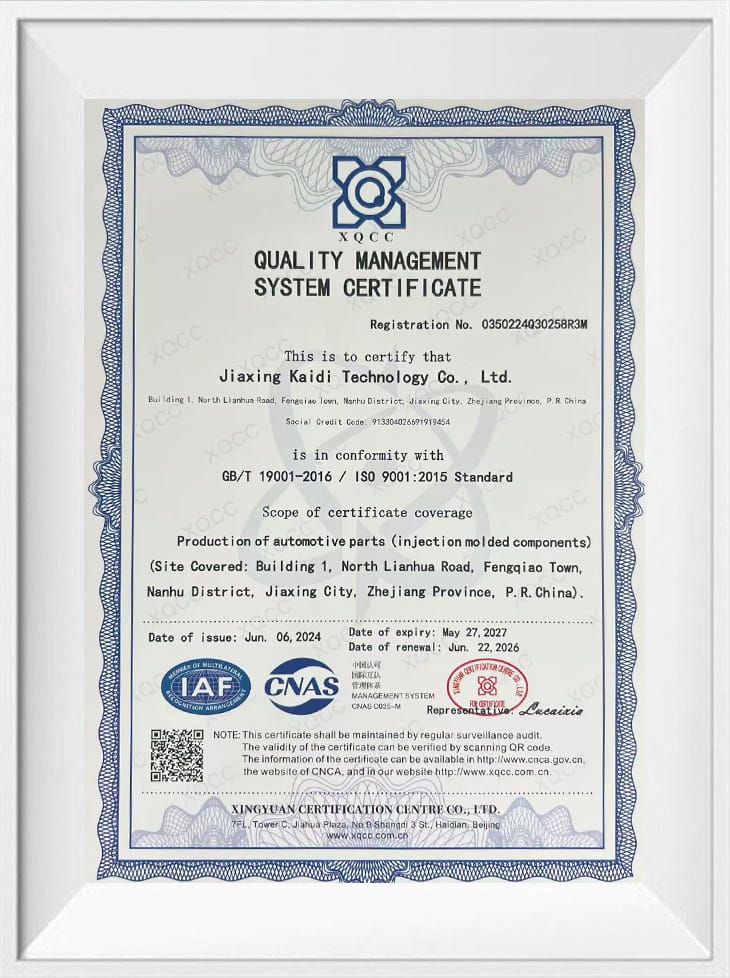

Jiaxing Kaidi Technology Co., Ltd. is an Automotive Injection Molds manufacturer based in Jiaxing, Zhejiang, building tools for interior and exterior trim, functional plastic parts and visible cosmetic components. Toolmaking sits inside our own molding, painting and assembly operation, so each mold is engineered against the press, the polymer and the finishing route it will actually run in. The site covers 52 acres with a 35,000 ㎡ factory area; the injection molding and spraying workshops employ more than 100 people, over half of them technicians.
Tool and part designers with more than ten years of experience in automotive and small-appliance molds review the component data first, then the tool is built, sampled on production presses and released against an agreed dimensional and cosmetic basis.
- Toolmaking — precision injection molds for automotive plastic components, built in-house
- Sampling — Moldflow-supported process development and trial molding
- Production — volume Injection Molding of the released part
- Finishing — spray painting, coating and finished-product assembly
Where Our Automotive Molds Fit
Automotive interior and exterior trim spare parts are our core product line, supported by work in household appliances, office automation equipment, medical devices, telecom equipment, robots and flight vehicles. That mix matters to tool design: a trim panel that will be painted carries different requirements from a hidden bracket that carries load.
- Visible trim and covers — parting-line placement, texture or high-gloss surfaces, gating that leaves no witness marks on the A-surface
- Exterior parts — warpage control, UV-stable polymers, robust ejection for large projected areas
- Functional and structural parts — wall-thickness consistency, rib and boss design, dimensional capability on mating features
- Painted components — substrate flatness and surface integrity that survive coating and oven cure without sinking or showing flow marks
When a component sits between two of these classes, we resolve the conflict at design stage rather than at trial, because gating and cooling choices made for cosmetics can limit cycle time and dimensional stability later.
Tool Range and Configuration Choices
We build molds across the part sizes and volumes our presses support, with trials run on production machines up to 1380 tons. Configuration is matched to the component class and to the volume the tool must deliver over its life.
| Tool class | Typical components | Configuration focus |
|---|---|---|
| Interior trim molds | Trim panels, covers, bezels, console parts | Surface finish, gate position, texture and grain transfer |
| Exterior trim molds | Exterior covers, housings, trim strips | Warpage, UV-grade polymers, weather-facing cosmetics |
| Functional part molds | Brackets, frames, structural housings | Dimensional capability, rib and boss integrity, ejection balance |
| Two-color and multi-material tools | Parts combining hard and soft or two colorways | Shut-off integrity between shots, bonding, runner layout |
| High-tonnage molds | Large panels and one-piece covers | Fill balance, clamp and injection pressure, cooling uniformity |
Design Review Before Steel Is Cut
Every tool starts with a DFM review that covers parting line, gate, wall thickness, draft, undercuts, critical dimensions and surface requirements. Moldflow simulation then evaluates fill, pressure, temperature distribution and weld-line location before the design is approved, so changes cost documents rather than hardened steel.
- Parting-line and shut-off definition, including slider and lifter zones for undercuts
- Gate type and location against cosmetic, weld-line and packing requirements
- Cooling circuit layout for balanced temperature and predictable cycle time
- Ejection layout that avoids marking or distorting thin and deep-draw areas
- Tool steel and insert strategy matched to abrasive fillers and production volume
Trial Molding, Accuracy and Acceptance
Trials run on production presses up to 1380 tons so the process measured on the sample is the process that will run your order. Sample parts are checked in our measuring room with dimensional instruments, and results are reviewed against the component drawing before approval.
- Dimensional report against the released drawing and CAD data
- Cosmetic assessment on visible surfaces under agreed lighting and finish criteria
- Process window recorded for fill, hold, cooling and cycle time
- Sample approval by the customer before production release
Where a dimension or surface result falls outside the agreed basis, we correct the tool and re-sample rather than relying on process compensation that will drift at volume.
From Tool to Painted, Assembled Part
Because the mold, the press, the paint line and the assembly cell sit in one plant, tooling decisions are made with the downstream process visible. Automotive components can move from molding directly into Automotive & Motorcycle Painting for UV coating, matte or high-gloss finishes, then into assembly.
- Molding and two-color molding for the released part
- Spray painting with UV, matte and high-gloss finishes
- Finished-product assembly and packing handled under one project file
That continuity shortens the loop between a cosmetic defect found at painting and the tooling change needed to remove it. Finished parts from this chain are documented under Automotive Plastic Parts.
Maintenance, Spares and Serviceability
Tools are designed for the maintenance they will need: replaceable inserts in high-wear areas, accessible ejector systems and cooling circuits that can be documented and reconnected without guesswork. Our mold maintenance workshop supports scheduled servicing, corrective repair and refurbishment through the production life of the tool.
- Wear-part and cooling-circuit records kept with the tool
- Planned maintenance intervals agreed against shot count and material
- Replacement inserts, ejector elements and standard components supported after handover
Information We Use to Configure Your Solution
A workable quotation for an automotive injection mold depends on more than a part drawing. The inputs below let us fix the tool structure, press match, sampling plan and delivery scope in the first proposal instead of revising later.
- 3D part data and 2D drawing with critical dimensions, tolerances and datum scheme
- Polymer grade, filler content and any multi-material requirement
- Annual volume, batch size and expected tool life in shots
- Target press tonnage or existing machine constraints at your plant
- Cosmetic standard: texture, gloss level, paint route and accepted surface criteria
- Undercut, slider and lifter restrictions, plus assembly interfaces
- Acceptance basis, documentation language and packaging or shipping requirements
- Project milestones, sample quantities and any gate or tool-standard preferences
Automotive Injection Molds: Common Questions
Which automotive parts can you build tooling for?
Our tooling covers automotive interior and exterior trim, covers, housings, brackets and functional plastic parts, including components that will be painted or assembled after molding. Part size is bounded by the production presses we trial on, which run up to 1380 tons, so large panels and one-piece covers are within scope while parts beyond that clamp force are reviewed case by case.
Do you mold and paint production parts after the tool is approved?
Yes. Toolmaking, injection molding, spray painting and finished-product assembly are all carried out in our Jiaxing plant, including two-color molding and UV, matte or high-gloss coating. Running the tool in our own presses during sampling means the cycle and process window recorded at approval are the ones used for your production orders.
How is a new tool accepted before volume production?
Acceptance is agreed at order stage and normally combines a dimensional report against the released drawing, cosmetic evaluation of visible surfaces to the defined finish, and customer approval of trial samples. Weld-line location, warpage and gate appearance are predicted in Moldflow before steel is cut and then verified on the sampled parts.
What happens to the mold after the project ends?
The tool remains serviceable through our mold maintenance workshop, which handles scheduled servicing, corrective repair and replacement of wear elements. Maintenance intervals are set against shot count and polymer, and tool records kept with the mold make later refurbishment or transfer to another press predictable.
